



Introduction
Artificial Intelligence (AI) is rapidly shaping the future of technology and society. From smart devices and self-driving cars to advanced healthcare and business automation, AI is becoming an important part of everyday life. As technology continues to evolve, Artificial Intelligence will create new opportunities, improve industries, and solve complex problems. At the same time, it also brings challenges that require responsible development and ethical use.
Emerging AI Trends
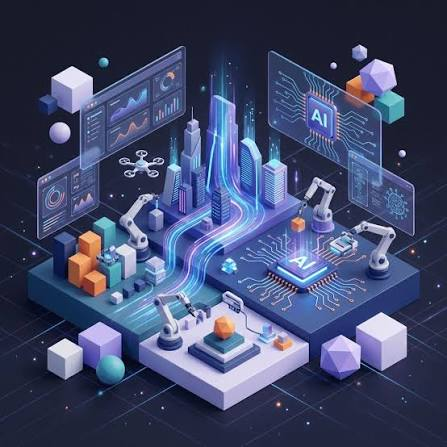
Artificial Intelligence is advancing at an incredible pace. Technologies such as generative AI, machine learning, robotics, natural language processing, and computer vision are transforming industries and changing how people work, learn, and communicate.
Smarter Automation
In the future, AI will automate more repetitive and time-consuming tasks in businesses, factories, hospitals, and offices. This will increase productivity, reduce costs, and allow people to focus on creative and strategic work.
AI in Healthcare
Artificial Intelligence will continue to improve healthcare through faster disease detection, personalized treatments, robotic surgery, and remote patient monitoring. These innovations will help doctors provide better and more efficient medical care.
AI in Education
Future classrooms will use AI-powered learning platforms to provide personalized education, instant feedback, and interactive learning experiences. Students will benefit from customized study plans based on their learning needs.
Business and Economic Opportunities
AI will create new business opportunities, improve customer service, increase efficiency, and support better decision-making. Many industries, including finance, agriculture, manufacturing, and retail, will continue to benefit from AI-powered solutions.
Smart Cities and Transportation
Artificial Intelligence will help build smart cities by improving traffic management, public transportation, energy efficiency, and public safety. Self-driving vehicles and intelligent transportation systems may become more common in the coming years.
Career Opportunities in AI
As AI continues to grow, the demand for professionals such as AI engineers, machine learning specialists, data scientists, robotics engineers, and cybersecurity experts will increase. Learning AI-related skills can open many exciting career opportunities.
Challenges of Artificial Intelligence
Despite its advantages, AI also presents important challenges. These include data privacy concerns, cybersecurity risks, job displacement due to automation, algorithm bias, and ethical decision-making. Governments, businesses, and technology experts must work together to ensure AI is developed responsibly.
Responsible and Ethical AI
The future of AI depends on transparency, fairness, and accountability. Artificial Intelligence should be designed to protect privacy, reduce bias, respect human rights, and support people rather than replace human intelligence.
Conclusion
The future of Artificial Intelligence is full of possibilities. It will continue to transform healthcare, education, business, transportation, and many other industries while creating new opportunities for innovation and economic growth. By developing and using AI responsibly, society can enjoy its benefits while addressing the challenges that come with this powerful technology.